8 Black Panther Party Programs That Were More Empowering Than Federal Government Programs

Black panther free breakfast

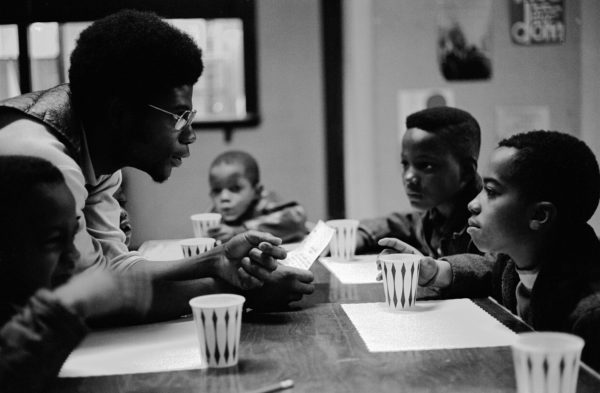
The Breakfast Program

The free breakfast for schoolchildren program was set up in Berkeley, California, in 1968 by Bobby Seale and Huey P. Newton. It was the first significant community program organized by the Panthers, and perhaps the most well known. By the end of 1969, free breakfast was served in 19 cities, under the sponsorship of the national headquarters and 23 local affiliates. More than 20,000 children received full free breakfast (bread, bacon, eggs, grits) before going to their elementary or junior high school.

122211-national-body-and-soul-black-panthers-book

Health Clinics

The clinics were called People’s Free Medical Centers (PFMC) and eventually were established in 13 cities across the country, from Cleveland to New Haven, Connecticut; and from Winston-Salem, North Carolina, to Los Angeles. Women, according to sociologist Alondra Nelson, were the backbone of the effort — not surprising, considering that approximately 60 percent of Black Panther Party members were female. Some of the clinics were in storefronts, others in trailers or hastily built structures, and most did not last long. But they offered services such as testing for high blood pressure, lead poisoning, tuberculosis and diabetes; cancer detection screenings; physical exams; treatments for colds and flu; and immunization against polio, measles, rubella, and diphtheria. Nelson reports that many of the women and men involved in the PFMCs went on to become credentialed health care professionals.
Still independent.

We hope this story was worth your time. For over 14 years, Atlanta Black Star has stayed Black-owned and independently run. We didn't get here by waiting on ad budgets that were never built to prioritize us. Our readers did that.

Corporate support for Black media has always been thin. Outlets like ours get roughly 1% of the $170 billion spent on U.S. advertising each year, and that margin is shrinking further as advertisers walk back the DEI-linked commitments they made in 2020. That's the backdrop. It's not why we're asking.

The wider picture isn't any steadier. Newspaper ad revenue has fallen more than 80% since 2005, and local newsrooms are closing at a rate of roughly two a week nationwide. When outlets go under, it's rarely the ones built to center a Black perspective from the ground up that get to stick around.

We know a request for support isn't why you came here. But without readers choosing to fund this work directly, the depth of reporting we can do at home and abroad shrinks along with everyone else's. If you're not in a position to give, that doesn't change how much we value you as a reader.

If you are able to, a recurring contribution does more for us than a single one-time gift, because it lets us plan the next investigation instead of just the next invoice. It takes about 30 seconds, no long form, no account. Thank you for continuing to support independent journalism and freedom of the press.

Back to top